
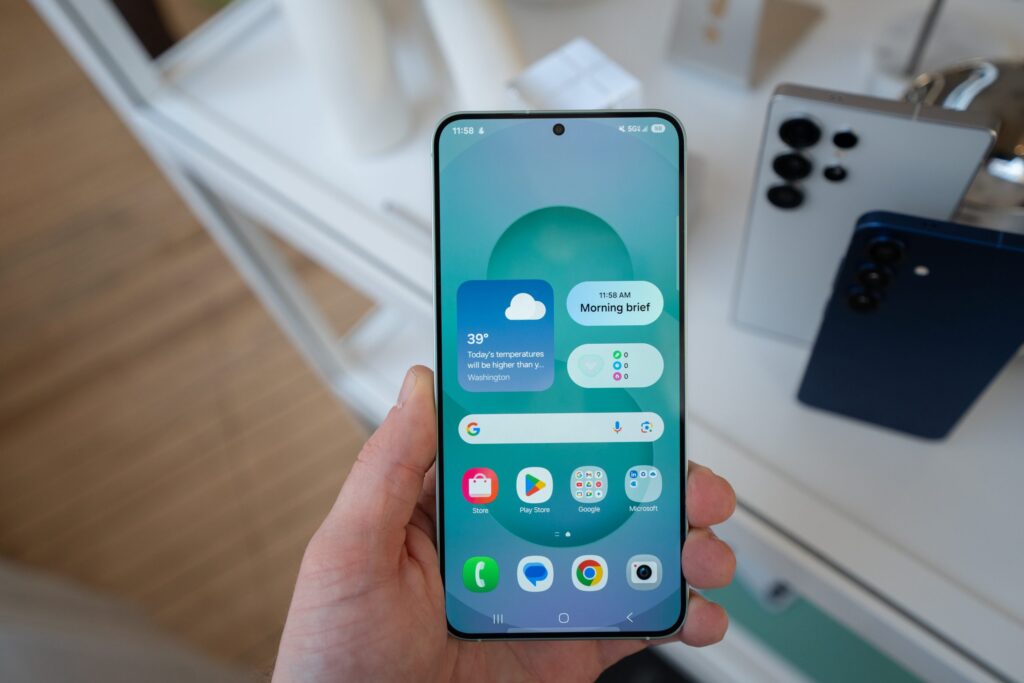

Samsung has been developing its own AI technology for several years, and the Galaxy S26 will prominently feature this innovation. The company plans to integrate its in-house Gauss AI model into the Galaxy S26 series, with several exclusive on-device features expected at launch.
Recent leaks indicate that the deeper integration of Gauss AI could become a key selling point for the Galaxy S26, offering capabilities that older Galaxy models may not receive, even with future software updates. Gauss is Samsung’s family of generative AI models, refined into “Gauss 2.0,” designed for on-device tasks such as text summarization, image generation, and language assistance.
Previously, Samsung has kept Gauss under the broader “Galaxy AI” branding, relying significantly on Google’s Gemini in the cloud, particularly for the Galaxy S24 and S25. By emphasizing Gauss in the Galaxy S26, Samsung may aim to reduce its dependence on Google and position its AI technology as a competitor to Gemini.
For the Galaxy S26, reports suggest that Samsung will integrate the Gauss model directly into the system, allowing features to operate fully on the device’s hardware rather than relying on a hybrid local-plus-cloud approach. One example is an AI notification summary in One UI 8.5, which uses Gauss to condense the last 24 hours of notifications into a digestible format, a feature that may be hidden or disabled on older devices.
Leaks also indicate that One UI 8.5 will include a range of AI features reserved for the Galaxy S26, even though older phones will receive the same software version. The Galaxy S26 models are expected to have deeper on-device Gauss integration, along with sufficient RAM and NPU power to run these features locally, while older devices may either miss out or rely more on cloud services.
Running more AI on-device is anticipated to enhance speed and privacy for tasks, but it may require additional memory and processing resources, potentially leading Samsung to implement stricter background app management on the Galaxy S26.
—