
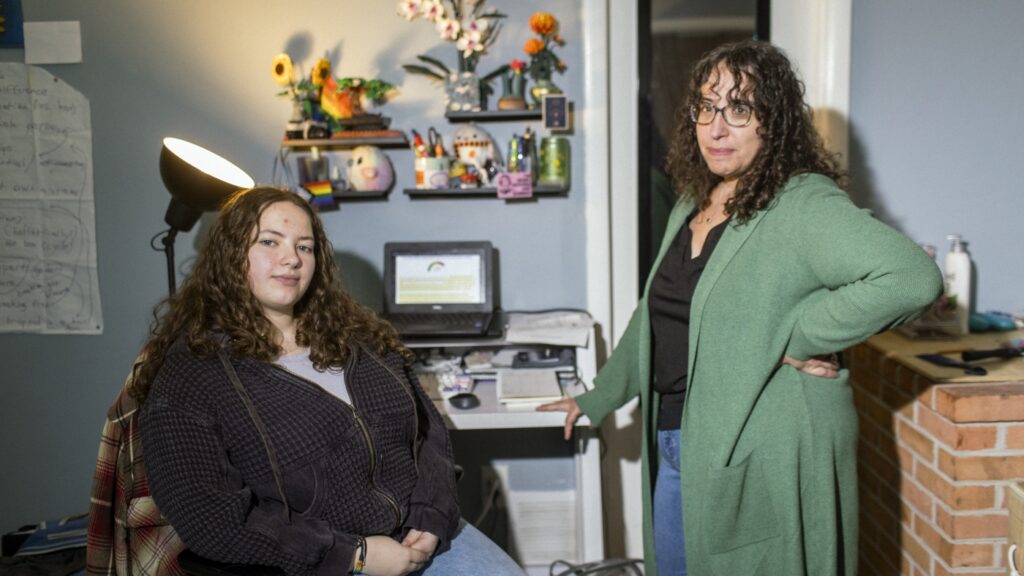

Ailsa Ostovitz has faced accusations of using AI for assignments across two classes this school year. The 17-year-old expressed her frustration, saying, “It’s mentally exhausting because it’s like I know this is my work. I know that this is my brain putting words and concepts onto paper for other people to comprehend.”
At Eleanor Roosevelt High School in Maryland, Ostovitz shared that one teacher accused her of using AI after an AI detection program flagged her writing assignment, claiming a 30.76% probability that AI was involved. Ostovitz questioned the validity of this accusation, stating, “I write about music. I love music. Why would I use AI to write something that I like talking about?”
Ostovitz reached out to her teacher through the school’s online platform, urging for the use of a different detection tool. However, her grade was still affected, prompting her mother, Stephanie Rizk, to express concern about the teacher’s reliance on detection tools. Rizk emphasized the need for educators to get to know students and their skills before jumping to conclusions.
After a meeting with the teacher in November, it was revealed that the teacher had not received Ostovitz’s earlier message. The Prince George’s County Public Schools district clarified that the teacher used the AI detection software independently and that they do not fund this technology. The district warned staff not to rely on these tools, citing their inaccuracies.
Research indicates a significant number of teachers, over 40%, used AI detection tools in the previous school year. Despite studies demonstrating the unreliability of these tools, many schools are investing in them. Popular tools like Turnitin and GPTZero have shown to incorrectly flag non-AI writing as machine-generated and vice versa.
Broward County Public Schools in Florida committed over $550,000 for a three-year contract with Turnitin, which has introduced an AI detection feature. The tool generates a percentage indicating how much a student’s work may have been produced by AI; however, lower scores are cautioned to be less reliable.
Shaker Heights High School teacher John Grady uses the GPTZero tool, believing it provides a basis for discussions with students about their work. Grady uses it to indicate potential AI involvement, prompting follow-up with students when necessary. The CEO of GPTZero, Edward Tian, emphasizes the tool’s role as a supportive resource rather than a definitive judgment.
Students have expressed concerns about AI detection, particularly non-native English speakers like Zhang, who feel their writing can be misinterpreted as AI-generated. Concerns over funding for AI detection tools have also been raised, with suggestions that the money would be better spent on teacher development.
Carrie Cofer, an English teacher in Cleveland, stated her district does not currently invest in AI detection technology, deeming it an ineffective allocation of resources. She advocates for adapting teaching methods to address the challenges posed by AI rather than investing in technology that may not yield accurate results.
Ostovitz is now adjusting her approach, running her assignments through multiple detection tools and rewriting flagged sections, which adds time to her homework but helps her ensure the authenticity of her work.
—