


Counterfeit Monkey: A Unique Exploration of Words in Gaming
Weird Weekend
Weird Weekend is our weekly column celebrating the peculiar aspects of PC gaming, from unusual games to strange trivia and forgotten histories. Join us each weekend to discover the latest obsessions of Jeremy, Josh, and Rick — whether it’s exploring the official height of Garrett from Thief or recounting the story of a Vatican insider who pirated Football Manager.
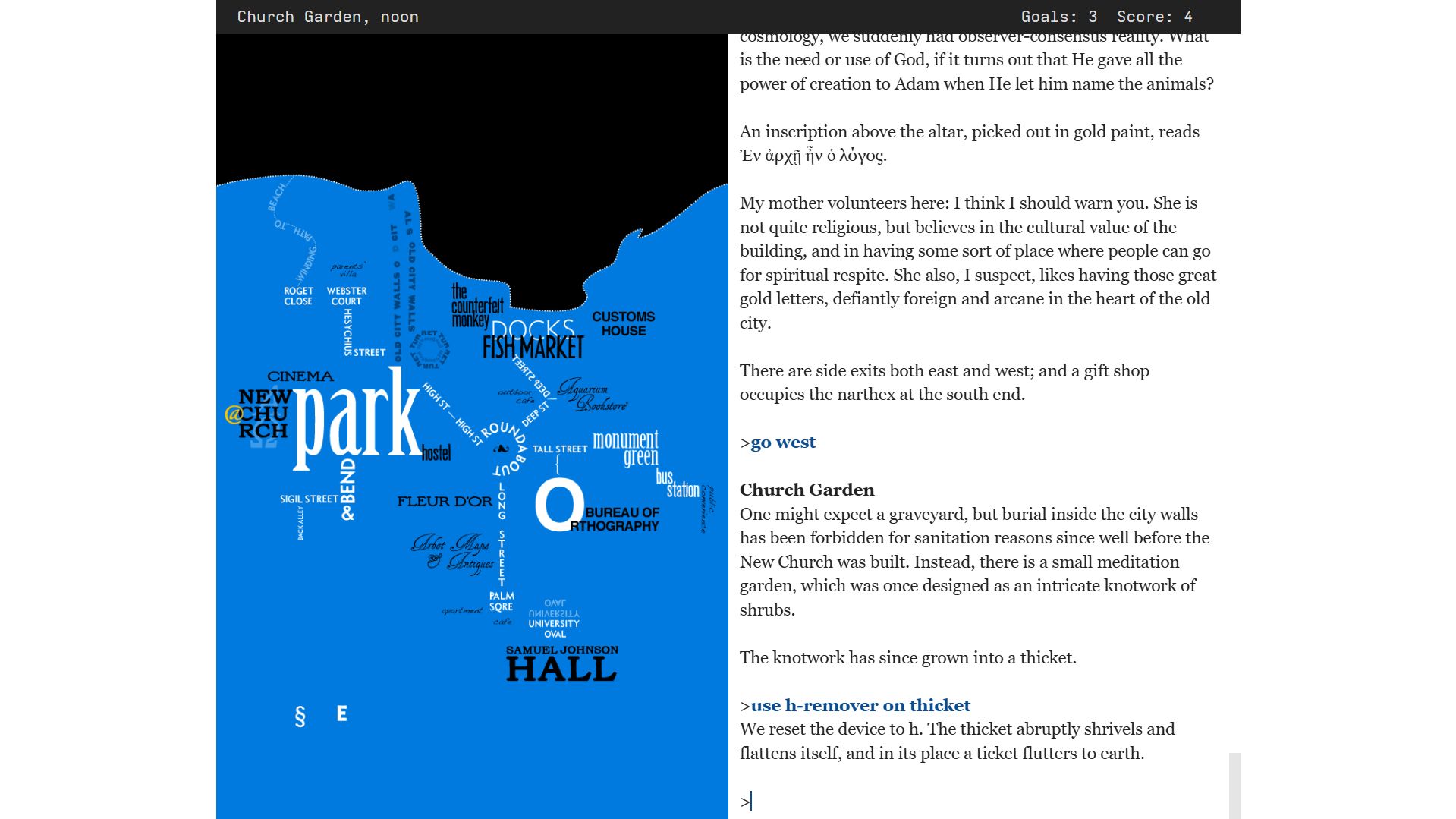
The extent of one’s engagement with a game can often be measured by the creativity invested in solving its puzzles. This was certainly the case with Counterfeit Monkey’s unique letter remover — a linguistic equivalent of a sonic screwdriver. I began by extracting a “chard” from a garden, removing its “h” to transform it into a “card”. Then, by eliminating the “r,” I created a sputtering, makeshift “car”.
From “garbage,” I fashioned a “garage,” complete with a mildly puzzled mechanic who advised that my vehicle required fuel. Using a touch of “sage” and a mirror, I managed to produce “gas” for the car. My word manipulation felt almost magical, bending reality through linguistic mastery.
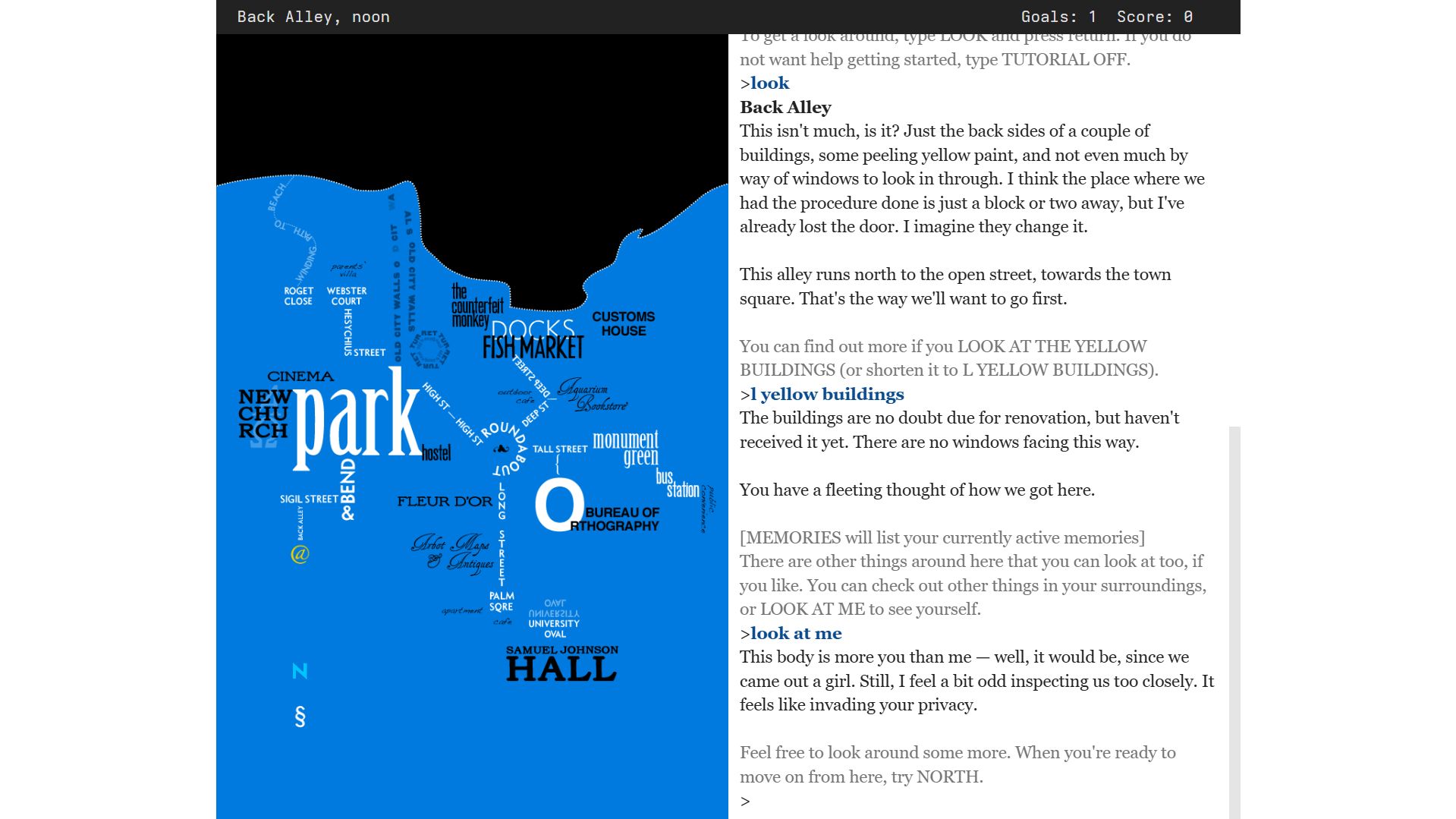
Counterfeit Monkey is a parser-based text adventure game. Players type commands to navigate the world and interact with objects and characters.
While it would be feasible to envision Counterfeit Monkey as a point-and-click adventure — infused with a certain LucasArts charm — the addition of graphics would detract from its essence. The game delves into the meanings we attribute to language, celebrating the unique power of written words. It evokes the ability to weave vivid imagery and narratives from mere letters arranged on a page.
Though this notion may appear lofty, Counterfeit Monkey unfolds with the intensity of an espionage thriller. Players find themselves in the role of a fugitive navigating an oppressive environment, akin to the mythical Island of Atlantis. Within this world, words hold power, leading to strict regulations that restrict all languages but English, thereby limiting the populace’s ability to transform objects.
The Bureau of Orthography oversees naming for immigrants and ensures multilingual pets adhere to regulations. It stockpiles letter inserters and depluralisation cannons — devices that have been employed historically, including a notable incident in 1822 when usage reduced a British fleet to a single ship.
This world presents a chilling argument for transforming individuals into objects as an alternative to capital punishment: “The personality of an individual transformed into an inanimate object remains intact and can be restored should new evidence arise; in the meantime, they pose no threat to society and incur far fewer costs than maintenance in prison.”
While this concept should not be taken lightly, it led to an encounter with a man named Mark, whom I whimsically transformed into an “ark” — an immense vessel that immediately crushed me. The Atlanteans may impose stringent regulations, but they rightly recognize the potential dangers of word manipulation if approached carelessly.
The depth of the worldbuilding elevates Counterfeit Monkey from an experiment in puzzles to a memorable adventure. Writer Emily Short has infused her game with intelligent puzzles, alongside a keen understanding of the human response to a new form of magic, both socially and politically. This fascination is paired with elements of tension, danger, and familial relationships.
“Suddenly it dawns on me that this may be my last chance to see my mother,” Short writes in a poignant moment. “I’m trying to memorize the exact cut of her hair, the sound of her Italian heels, all while she remains oblivious to the significance of this moment.”
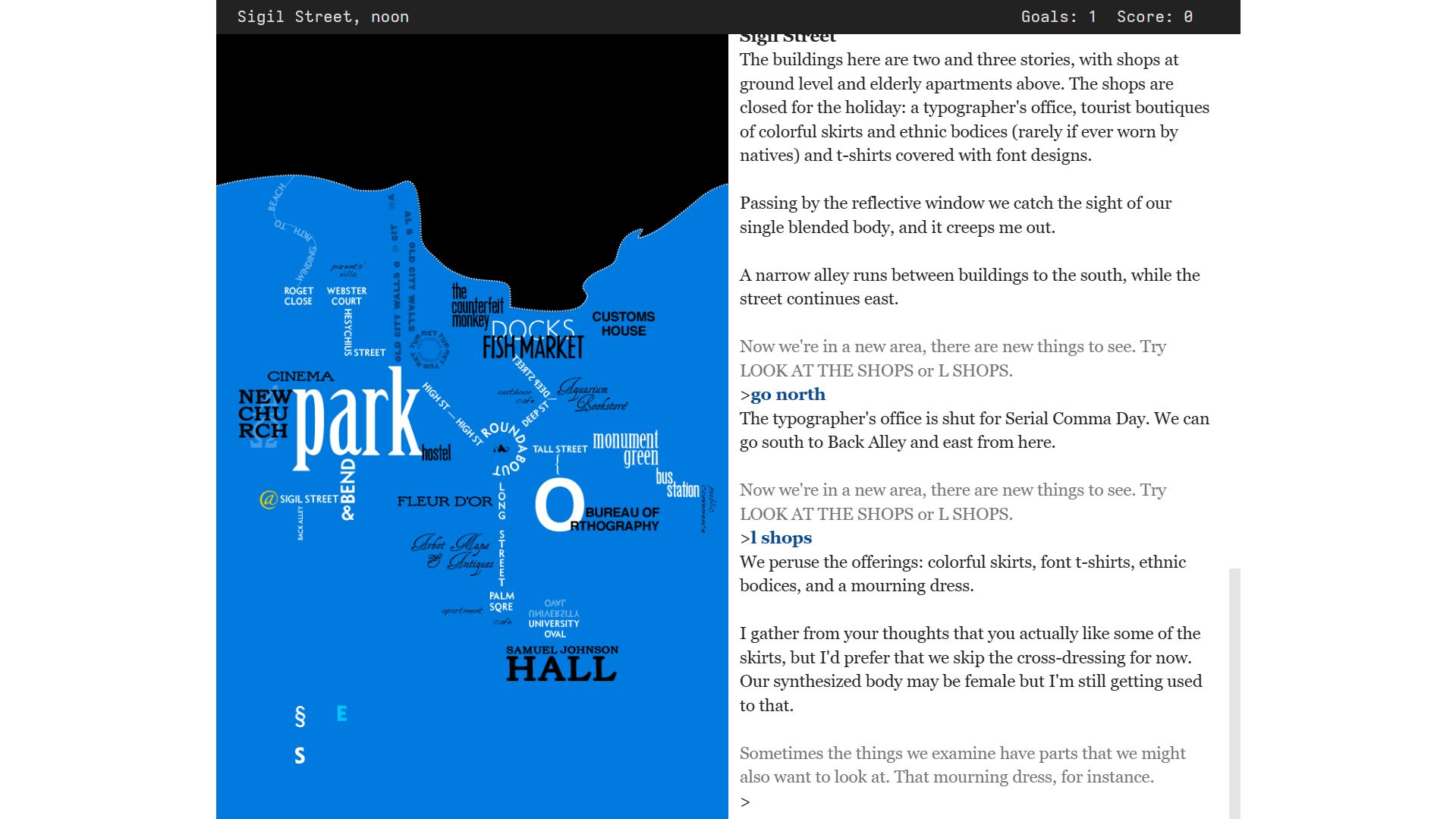
Additionally, a unique narrative angle involves merging with another personality early in the gameplay—a concept termed as a “depluralisation.” At the game’s outset, the protagonist acknowledges, “We’re Alexandra now,” indicating that the character shares their body and consciousness with another individual.

This intriguing premise adds depth to the often quirky mechanics of the parser genre, where players share their experience with an unseen companion—the voice that narrates their actions. Unlike before, this character emerges with a name, history, and emotions to navigate.
Emily Short’s contributions to interactive fiction have positioned her as a key figure in the genre. She continued her narrative exploration with Fallen London, an expansive choose-your-own-adventure tale. In 2023, she directed Mask of the Rose, a visual novel set in the Fallen London universe that involves crafting stories with characters and motivations, showcasing a similar admirable thought process present in Counterfeit Monkey.
For many, Counterfeit Monkey stands as the purest manifestation of Short’s narrative prowess. Released for free on New Year’s Eve in 2012, the game radiated creativity and intellect, a tribute to her exceptional vision. Releasing such a work into the world feels akin to sharing a piece of one’s identity—a grand act of pluralisation.
—
Source link