
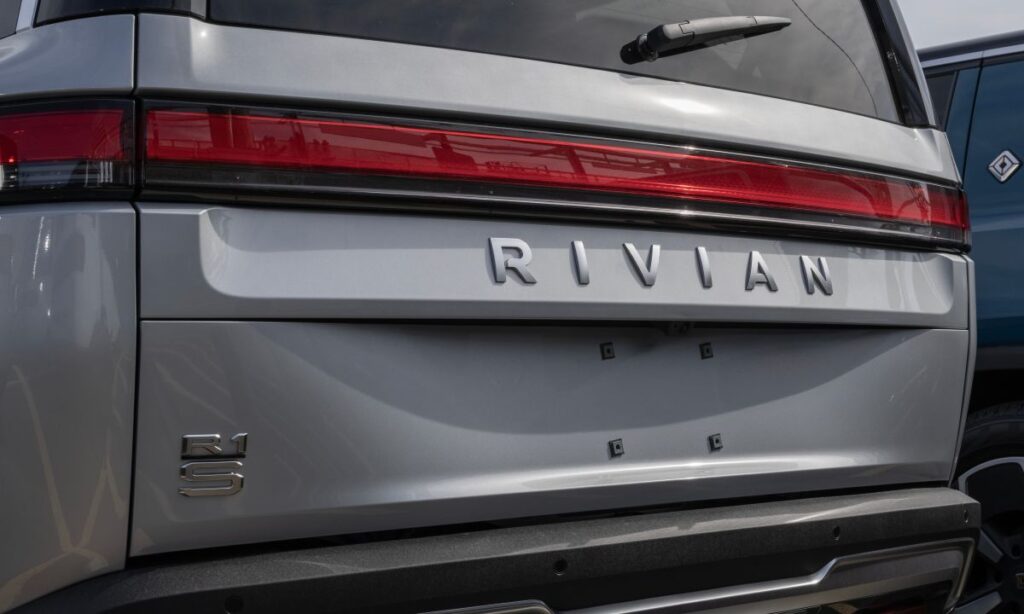

Rivian Automotive has introduced a custom artificial intelligence (AI) chip and a comprehensive autonomy platform that have been designed and engineered internally. This announcement was made during the company’s first “Autonomy & AI Day” held in Palo Alto, California. The initiative signifies a shift away from dependence on third-party computing solutions like Nvidia’s processors. Rivian stated that its newly developed silicon and software architecture will enable next-generation driver assistance and automated capabilities, starting with the upcoming R2 vehicle line and extending to future models.
The announcement underscores a broader trend in the electric vehicle (EV) industry towards vertical integration of hardware and software. Rivian described the custom chip as specifically engineered to meet the needs of autonomous driving systems, which require seamless coordination between sensors, neural networks, and computing resources.
This approach differs from the use of general-purpose chips from Nvidia, which are designed for a wide range of customers and applications, potentially limiting long-term customization and slowing feature development.
### Rivian’s Custom Silicon and Platform Design
At the core of Rivian’s initiative is the Rivian Autonomy Processor (RAP1), a custom chip fabricated by Taiwan Semiconductor Manufacturing Co. (TSMC), optimized for vision-centric AI tasks. Rivian stated that RAP1 powers its new third-generation compute architecture, the Autonomy Compute Module 3 (ACM3), which is expected to be delivered in production vehicles beginning with the R2 in late 2026.
Rivian also plans to incorporate lidar sensors along with cameras and radar in future vehicles as part of a multimodal sensor strategy aimed at enhancing object detection and redundancy. The company introduced new autonomy software based on a foundational “Large Driving Model,” a neural network trained on both real and simulated driving data, intended to improve perception and planning in future vehicles.
### Shift From General-Purpose Chips
Rivian intends to replace Nvidia processors previously used in older generations of its autonomy systems with its in-house silicon in future vehicles. Rivian’s leadership has emphasized that autonomy requires an end-to-end approach, necessitating simultaneous development of compute, sensors, models, and software, rather than adding them onto existing platforms. This strategy reflects a growing belief among automakers that tighter integration across the autonomy stack can enhance development speed and long-term flexibility, even with ongoing caution regarding timelines for advanced self-driving capabilities.
Additionally, Rivian has introduced a subscription service called Autonomy+, which will provide enhanced driver-assistance features at a cost of $2,500 upfront or $49.99 per month, significantly lower than similar offerings from competitors. The service is projected to enable universal hands-free driver assistance on over 3.5 million miles of mapped roads across the U.S. and Canada, substantially expanding Rivian’s assisted driving coverage.
### Strategic Parallels in Auto and Tech
By developing its own silicon, Rivian aligns itself with companies pursuing vertical integration as a competitive strategy. Tesla has long developed its own full self-driving processors, working with Samsung and TSMC to customize compute performance for its software needs.
Chinese automakers like BYD, XPeng, and Nio have also launched proprietary chips and autonomy platforms, sometimes considering licensing that technology to other manufacturers. This trend illustrates a broader movement in the industry towards greater control over core compute components as autonomy becomes increasingly critical to product differentiation.
Outside the automotive sector, Apple’s shift to custom silicon for its consumer devices, despite the availability of capable processors from Intel and Qualcomm, provides a parallel. By creating chips tailored to its software and product objectives, Apple has achieved advantages in performance, power efficiency, and product integration. Rivian seems to be applying similar principles to autonomous driving, viewing the compute layer as strategic intellectual property rather than a commodity.
Rivian anticipates that vehicles equipped with its custom autonomy hardware and software will begin production in late 2026, with ongoing updates to both hands-free and higher-level autonomous features in the years to follow.
—