
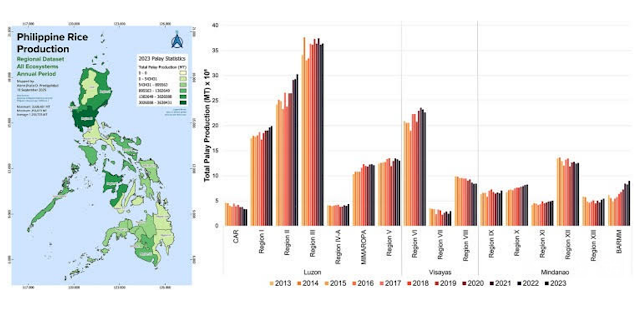

Recent research highlights the ongoing challenges in Philippine rice production, revealing a significant consumption gap. In 2022, the country consumed 2.3 million metric tons more rice than it produced, marking an 18 percent shortfall. Despite various government initiatives aimed at boosting local harvests, national rice output has stagnated since 2017.
From 2013 to 2023, total palay production increased by only 9 percent, while farmland expanded by just 1 percent. The study, conducted by Ateneo de Manila University, indicates that urbanization is not the primary cause of stagnant production. Instead, factors such as limited farmland growth, climate shocks, and uneven public investment are constraining local output.
Regional disparities are evident, with areas like the Cordillera Administrative Region experiencing a 15 percent drop in rice production, while the Bangsamoro Autonomous Region in Muslim Mindanao saw a 40 percent increase. The findings suggest that tailored policies and investments are crucial for closing the rice deficit and enhancing food security in the Philippines.
—
Source:
http://www.techpinas.com/2025/11/Philippine-Rice-Production-Ateneo-Research.html